
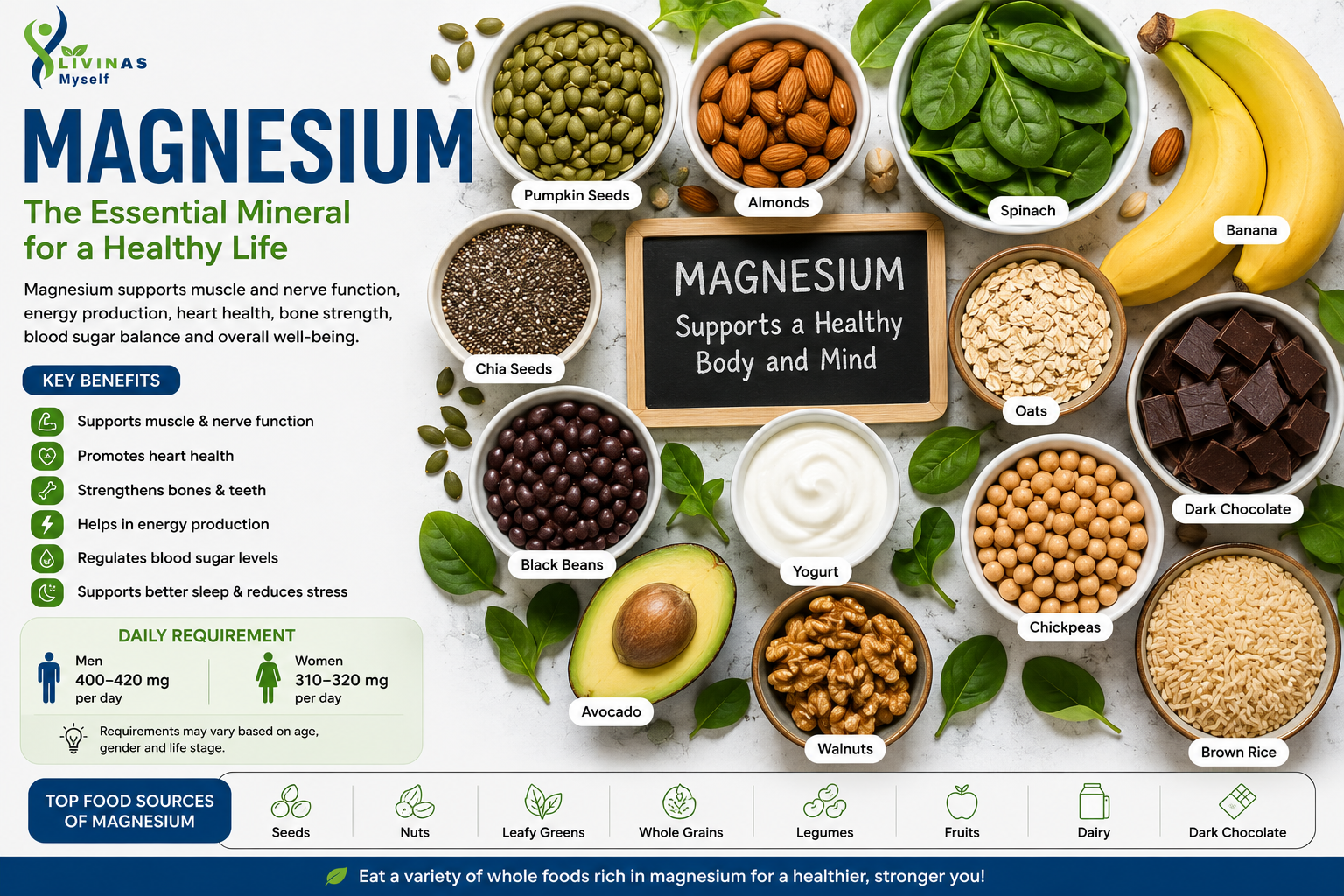

It is an essential mineral that plays a vital role in keeping your body healthy. It supports muscle and nerve function, helps regulate blood sugar levels, contributes to healthy bones, and assists in energy production. Despite its importance, many people do not consume enough magnesium through their daily diet.
Including magnesium-rich foods as part of a balanced eating pattern can help support overall health and well-being.
What Is Magnesium?
It is a mineral naturally found in many foods and is involved in more than 300 biochemical reactions in the body. It helps convert food into energy, supports muscle and nerve function, and contributes to the normal functioning of the heart, bones, and immune system.
Because the body cannot produce magnesium on its own, it must be obtained through food or supplements when recommended by a healthcare professional.
Why It Is Important?
Magnesium supports many essential body functions, including:
• Helps muscles contract and relax normally
• Supports healthy nerve function
• Contributes to normal heart rhythm
• Helps maintain strong bones and teeth
• Assists in energy production
• Supports normal protein synthesis
• Helps regulate blood sugar levels
• Supports normal blood pressure
• Plays a role in DNA and RNA production
Health Benefits of Magnesium
1. Supports Muscle Function
It helps muscles contract and relax properly. Adequate intake may reduce the risk of muscle cramps related to magnesium deficiency in some individuals.
2. Promotes Heart Health
It supports normal heart muscle function and helps maintain a regular heartbeat. It also contributes to healthy blood pressure when consumed as part of a balanced diet.
3. Strengthens Bones
Around 50–60% of the body’s magnesium is stored in bones. It works together with calcium and vitamin D to support bone health and maintain bone density.
4. Supports Energy Production
It is involved in converting carbohydrates, fats, and proteins into usable energy, helping your body perform everyday activities.
5. Helps Maintain Healthy Nerve Function
The nervous system relies on it for proper communication between nerves and muscles.
6. Supports Blood Sugar Regulation
it plays a role in insulin function and glucose metabolism. Eating magnesium-rich foods as part of a healthy lifestyle may support normal blood sugar regulation.
7. May Improve Sleep Quality
it contributes to normal muscle relaxation and nervous system function, which may support better sleep in some individuals.
8. Supports Mental Well-being
Emerging research suggests magnesium may play a role in supporting mood and helping the body respond to stress, although more research is needed.
Best Food Sources of Magnesium
Nuts and Seeds
• Pumpkin seeds
• Chia seeds
• Flaxseeds
• Almonds
• Cashews
• Peanuts
Green Leafy Vegetables
• Spinach
• Kale
• Swiss chard
• Fenugreek leaves (methi)
Whole Grains
- Brown rice
- Oats
- Whole wheat
- Quinoa
Legumes
• Black beans
• Kidney beans (rajma)
• Chickpeas
• Lentils (dal)
• Soybeans
Fruits
• Bananas
• Avocados
• Figs
Dairy
• Yogurt
• Milk
Seafood
• Salmon
• Mackerel
• Tuna
Dark Chocolate
Dark chocolate with a high cocoa content is also a source of magnesium. Enjoy it in moderation as part of a balanced diet.
Magnesium-Rich Foods (Approximate Amount per Serving)
Food Magnesium
Pumpkin seeds (30 g) 150–170 mg
Almonds (30 g) 75–80 mg
Spinach (1 cup cooked) 150–160 mg
Black beans (1 cup cooked) 110–120 mg
Brown rice (1 cup cooked) 80–85 mg
Oats (1 cup cooked) 55–60 mg
Banana (1 medium) 30–35 mgAvocado (1 medium) 55–60 mg
Yogurt (1 cup) 40–45 mg
Dark chocolate (30 g, 70–85% cocoa) 60–65 mg
Values are approximate and may vary by variety and preparation.
How Much Magnesium Do You Need?
Recommended dietary allowances (RDAs) vary by age and sex.
Group Recommended Daily Intake
Men (19–30 years) 400 mg
Men (31+ years) 420 mg
Women (19–30 years) 310 mg
Women (31+ years) 320 mg
Pregnant women 350–360 mg
Breastfeeding women 310–320 mg
Consult a healthcare professional for personalized advice, especially if you are pregnant, breastfeeding, or have a medical condition.
Signs of Magnesium Deficiency
Mild deficiency may not cause noticeable symptoms at first. More significant deficiency can lead to:
• Muscle cramps or spasms
• Fatigue
• Weakness
• Loss of appetite,Nausea
• Tingling or numbness
• Irregular heartbeat (in severe cases)
• Mood changes
If you experience persistent symptoms, seek medical advice rather than self-diagnosing.
Who May Be at Higher Risk of Deficiency?
Some groups are more likely to have low magnesium levels, including:
• Older adults
• People with gastrointestinal disorders
• Individuals with type 2 diabetes
• People with chronic alcohol use disorder
• Those taking certain medications (such as some diuretics or proton pump inhibitors) under medical supervision
Can You Get Too Much of it?
Magnesium from foods is generally safe for healthy individuals. However, excessive intake from supplements can cause side effects such as diarrhea, nausea, and abdominal cramping. Very high doses may lead to serious health problems.
Always use supplements according to a healthcare professional’s advice.
Tips to Increase Magnesium Intake Naturally
• Eat a handful of unsalted nuts or seeds daily.
• Include leafy green vegetables in your meals.
• Choose whole grains instead of refined grains.
• Add beans and lentils to soups, salads, and curries.
• Enjoy fresh fruits like bananas and avocados.
• Include magnesium-rich foods regularly rather than relying on supplements.
Read another blog: Protein
Follow us on: Facebook
One thought on “Magnesium: An Essential Mineral for a Healthy Body”
Comments are closed.