
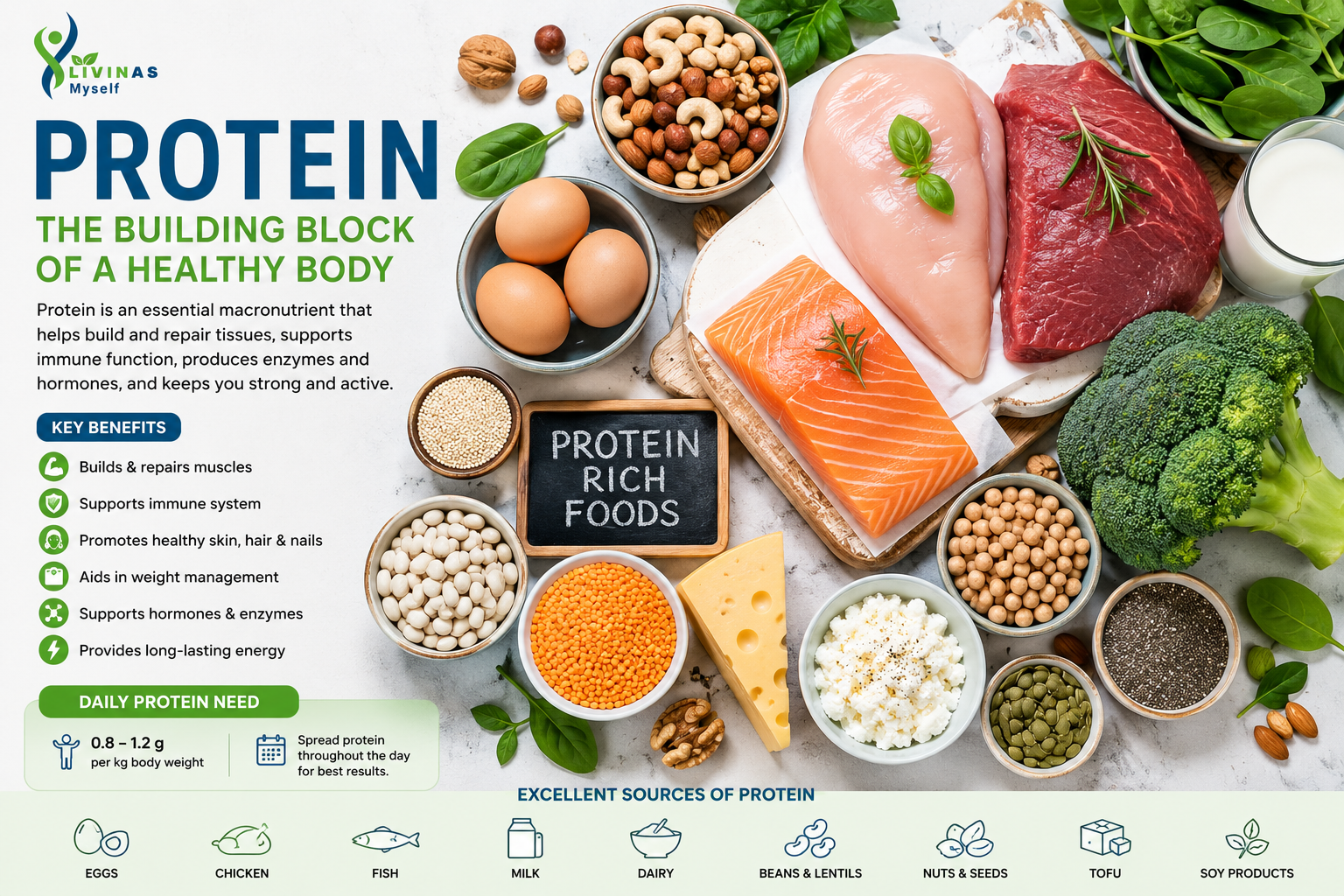
It is one of the most important nutrients your body needs every day. It plays a vital role in building muscles, repairing tissues, supporting the immune system, producing hormones and enzymes, and maintaining overall health.
Whether you’re a student, working professional, athlete, or older adult, getting enough protein is essential for staying strong, active, and healthy.
What Is Protein?
It is a macronutrient made up of small units called amino acids. These amino acids are often referred to as the “building blocks of life” because they help create and repair almost every cell and tissue in your body.
There are 20 amino acids, and 9 are essential, meaning your body cannot produce them. You must obtain these essential amino acids through your diet.
Why Is Protein Important?
It supports many important functions in the body, including:
• Builds and repairs muscles and body tissues
• Supports healthy skin, hair, and nails
• Produces enzymes and hormones
• Strengthens the immune system
• Helps transport oxygen and nutrients
• Promotes healthy growth and development
• Supports wound healing
• Helps maintain healthy bones
• Keeps you feeling full, which may support healthy weight management
Health Benefits of Protein
1. Builds and Maintains Muscle Mass
It helps repair muscle fibers after physical activity and supports muscle growth. Regular intake, combined with exercSupports Weight Managementise, is important for maintaining strength at every age.
2 Supports Weight Management
Its -rich foods help increase feelings of fullness, which may reduce overeating and support healthy weight management when combined with a balanced diet and regular physical activity.
3 Boosts Metabolism
Digesting it requires more energy than digesting carbohydrates or fats, contributing modestly to your daily energy expenditure.
4 Strengthens the Immune System
Antibodies that help fight infections are made from it. Adequate it intake supports normal immune function.
5 Promotes Healthy Bones
It works alongside calcium, vitamin D, and physical activity to help maintain healthy bones throughout life.
6 Supports Healthy Hair, Skin, and Nails
It such as collagen and keratin help maintain the structure and health of your skin, hair, and nails.
7 Aids Recovery
After illness, injury, or surgery, it supports tissue repair and recovery.
Best Sources of Protein
Animal-Based Sources
• Eggs
• Chicken breast
• Fish (salmon, tuna, sardines)
• Lean meat
• Milk
• Yogurt
• Paneer (cottage cheese)
• Cheese
Plant-Based Sources
• Lentils (dal)
• Chickpeas
• Kidney beans (rajma)
• Black beans
• Soybeans
• Tofu
• Tempeh
• Peas
• Quinoa
• Nuts (almonds, peanuts, walnuts)
• Seeds (chia, flax, pumpkin, sunflower)
High-Protein Foods (Approximate per Serving)
Chicken breast (100 g) 31 g
Fish (100 g) 22–25 g
Eggs (2 large) 12 g
Paneer (100 g) 18–20 g
Greek yogurt (200 g) 18–20 g
Tofu (100 g) 8–15 g
Lentils (1 cup cooked) 18 g
Chickpeas (1 cup cooked) 15 g
Rajma (1 cup cooked) 15 g
Milk (250 ml) 8 g
How Much Protein Do You Need?
It needs vary depending on age, body size, activity level, and health status.
General guideline for healthy adults:
Around 0.8 grams of protein per kilogram of body weight per day.
Examples:
• 50 kg person → about 40 g/day
• 60 kg person → about 48 g/day
• 70 kg person → about 56 g/day
• 80 kg person → about 64 g/day
People who are very physically active, pregnant, breastfeeding, recovering from illness, or older adults may require more. Individual needs can vary, so consult a registered dietitian or healthcare professional for personalized advice.
Signs of Protein Deficiency
Not getting enough protein may lead to:
• Muscle weakness
• Fatigue
• Slow wound healing
• Hair loss
• Brittle nails
• Frequent infections
• Reduced muscle mass
Can You Eat Too Much Protein?
Most healthy people can safely include protein as part of a balanced diet. However, consuming excessive amounts—especially from processed meats or supplements without medical guidance—may not provide additional benefits and may not be appropriate for everyone.
A balanced diet that includes fruits, vegetables, whole grains, healthy fats, and protein-rich foods is the best approach.
Tips to Increase Protein Intake Naturally
• Include a protein source with every meal.
• Start your day with eggs, Greek yogurt, or a protein-rich breakfast.
• Add lentils or beans to soups and salads.
• Snack on nuts, seeds, or roasted chickpeas.
• Choose tofu or paneer in vegetarian meals.
• Pair whole grains with legumes for a more balanced protein intake.
follow us on youtube: click here
Read another Blog: Click here
zOHwvgPwFgWVaZJZWa