
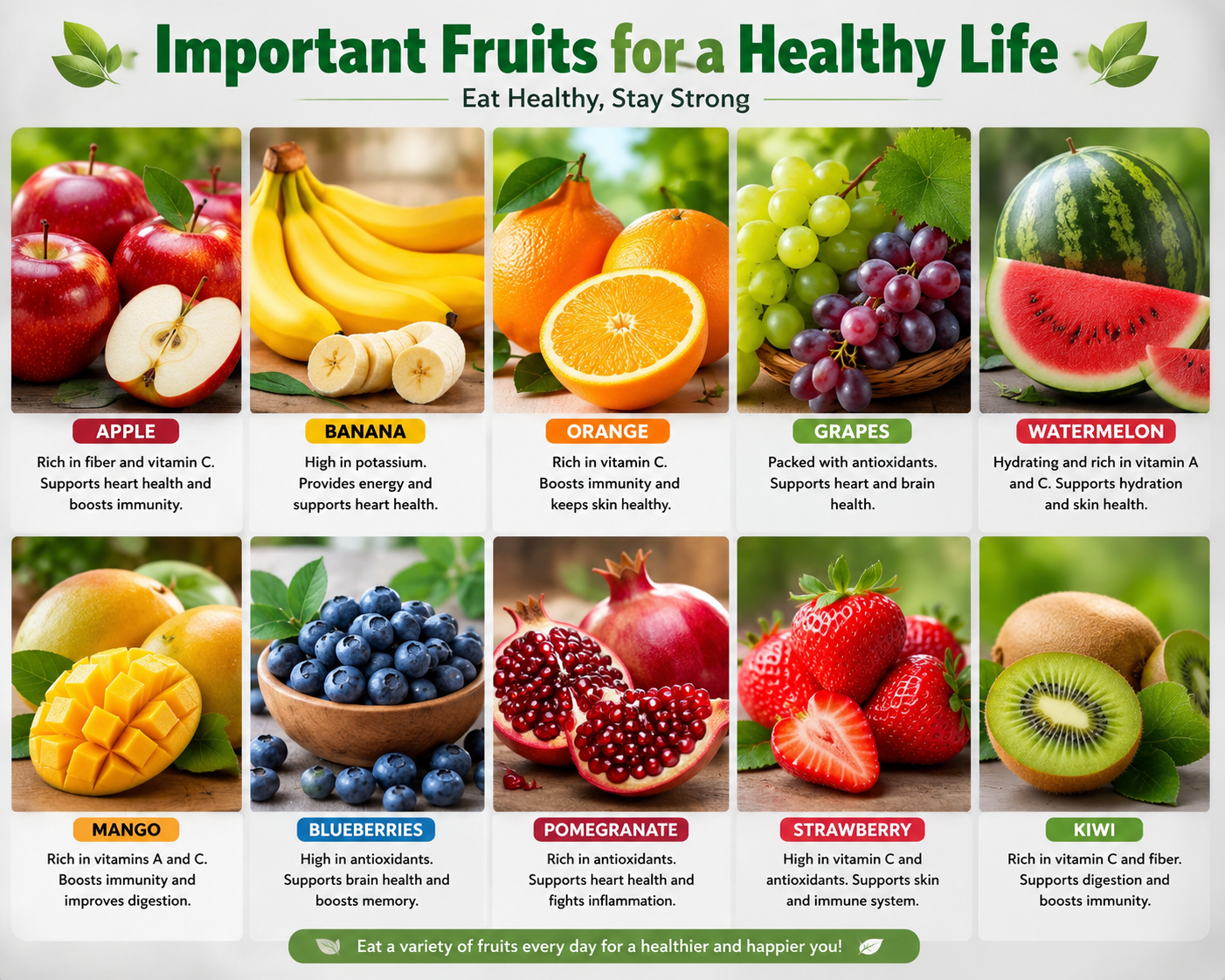
Fruits are nature’s gift to our health. Rich in vitamins, minerals, antioxidants, fiber, and water, they provide essential nutrients that help our bodies function properly. Eating a variety of fruits every day supports heart health, improves digestion, strengthens the immune system, and reduces the risk of many chronic diseases.
Health experts worldwide recommend including a variety of colorful fruits as part of a balanced diet to promote overall well-being and maintain a healthy lifestyle.

What Are Fruits?
Fruits are the edible, seed-bearing parts of plants that are naturally sweet or slightly tart. They are packed with essential nutrients that support growth, repair body tissues, and protect against illness.
Unlike processed snacks, fruits are naturally low in sodium and contain beneficial nutrients without added sugars or unhealthy fats.
Why Are Fruit Important for Health?
Fruits provide nutrients that your body needs every day, including:
- Vitamin C
- Vitamin A
- Potassium
- Folate
- Dietary Fiber
- Natural Antioxidants
- Water
- Various Phytochemicals
These nutrients work together to support overall health and reduce the risk of nutritional deficiencies.
Top Health Benefits of Eating Fruit
1.Boosts Immunity
Many fruit, especially citrus fruits, berries, kiwi, and guava, are excellent sources of vitamin C, which supports the normal functioning of the immune system and helps the body fight infections.
2.Supports Heart Health
Fruit contain potassium, fiber, and antioxidants that contribute to healthy blood pressure and cholesterol levels when consumed as part of a balanced diet.
Heart-friendly fruits include:
• Apples
• Oranges
• Bananas
• Berries
• Pomegranates
• Avocados
3.Improves Digestion
Fruits are naturally rich in dietary fiber, which supports healthy digestion, helps prevent constipation, and promotes a healthy gut microbiome.
Fiber-rich fruits include:
• Apples
• Pears
• Guava
• Papaya
• Berries
4.Helps Maintain a Healthy Weight
Whole fruits are generally low in calories and high in fiber and water, helping you feel fuller for longer. Replacing high-calorie snacks with fruit may support healthy weight management.
5. Keeps Skin Healthy
Vitamin C helps the body produce collagen, which supports healthy skin. Antioxidants found in fruits may help protect skin cells from oxidative stress.
Best fruits for skin health:
• Orange
• Kiwi
• Strawberry
• Papaya
• Mango
6.Supports Brain Function
Antioxidants and plant compounds found in fruit such as blueberries, grapes, and oranges may support healthy brain function as part of an overall healthy diet.
7.Helps Control Blood Pressure
Potassium-rich fruit help balance sodium levels and support healthy blood pressure.
Excellent sources include:
• Banana
• Orange
• Avocado
• Watermelon
8. Promotes Healthy Vision
Vitamin A-rich fruits support normal vision and eye health.
Examples include:
• Mango
• Papaya
• Apricot
• Cantaloupe
9. Supports Healthy Bones
Some fruits provide nutrients such as vitamin C, potassium, and magnesium that contribute to bone health when combined with adequate calcium, vitamin D, and regular physical activity.
10.May Reduce the Risk of Chronic Diseases
A diet rich in fruits and vegetables has been associated with a lower risk of several chronic conditions, including heart disease and certain types of cancer.
Best Fruit for Good Health
Fruit Key Nutrients Health Benefits
Apple Fiber, Vitamin C Supports heart and digestive health
Banana Potassium, Vitamin B6 Supports muscle and heart function
Orange Vitamin C Boosts immunity
Papaya Vitamin A, Vitamin C Aids digestion and supports skin health
Mango Vitamin A, Vitamin C Supports eye health and immunity
Guava Vitamin C, Fiber Supports digestion and immune function
Watermelon Water, Lycopene Helps with hydration
Kiwi Vitamin C, Vitamin K Supports immunity and skin health
Blueberries Antioxidants Supports brain and heart health
Pomegranate Antioxidants Supports heart health
Nutritional Value of Fruit
Fruits are naturally rich in:
• Vitamin C
• Vitamin A
• Potassium
• Magnesium
• Folate
• Fiber
• Antioxidants
• Water
Most fruits are naturally free of cholesterol and low in fat.
How Many Fruit Should You Eat Daily?
Many dietary guidelines recommend adults eat at least 2 servings (about 1½–2 cups) of fruit per day, depending on age, sex, and activity level.
One serving may include:
• 1 medium apple
• 1 medium banana
• 1 orange
• 1 cup of berries
• ½ cup chopped mango
• ½ cup grapes
Choose a variety of fruits to obtain a broad range of nutrients.
Fresh Fruit vs Fruit Juice
Fresh whole fruits are generally the healthier choice because they contain dietary fiber and help you feel full.
Fresh Fruit Fruit Juice
High in fiber Little or no fiber
More filling Less filling
No added sugar (whole fruit) May contain added sugar
Better for digestion Easier to consume excess calories
If choosing juice, opt for 100% fruit juice in moderation and prioritize whole fruits whenever possible.
Tips to Include More Fruits in Your Diet
• Add fruit to your breakfast cereal or oatmeal.
• Blend fruits into smoothies without adding sugar.
• Keep washed fruit available for quick snacks.
• Add berries to yogurt.
• Include fruit in salads.
• Pack fruit for work or school.
• Replace sugary desserts with fresh fruit.
Follow us on Youtube: Click Herehttps://www.youtube.com/@LivinasMyself
Read another Blog: Click Herehttps://livinasmyself.com/2026/07/14/protein-the-building-block-of-healthh/